In 2025, the EuChemS-DAC Sample Preparation Study Group and Network launched an initiative focused on education in sample preparation, with the aim of developing innovative educational resources to support researchers, educators, and students worldwide. The initiative comprised a series of Task Forces (TFs) dedicated to creating freely accessible materials, including guides, tutorials, and interactive tools, to enhance knowledge and practical skills in sample preparation.
The educational material generated addressed a broad range of topics, such as sample preparation, advanced microextraction techniques, and interactive learning tools, all designed to promote excellence in sample preparation education. The activity was coordinated by Assoc. Prof. Enrique Javier Carrasco Correa (University of Valencia, Spain).
The material generated through this initiative is presented below and is organized as follows:
Sample Preparation
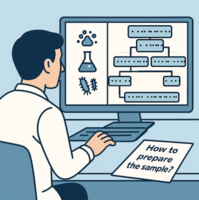
Title: Decision Trees for Sample Preparation: Exploring Analytical Strategies in Chemistry
Members: Ernesto Francisco Simó-Alfonso, Enrique Javier Carrasco-Correa, Andrea Tortosa Cabanes, Deneb Jiménez González, Paola Ogando-Rivas, Natalia Salvador-Rodríguez
Affiliation: CLECEM group, Department of Analytical Chemistry, University of Valencia, Spain
Description: This interactive decision tree helps students identify the most suitable sample-preparation technique by linking analyte, matrix, and extraction strategy, and by providing concise theoretical notes. It runs locally in any browser and offers quick access to curated literature examples to support teaching.
Link: https://go.uv.es/6mDcFeM
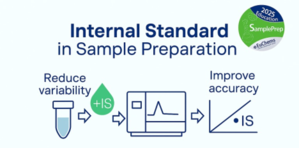
Title: Use of internal standards in sample preparation
Members: Isabel Ten Doménech, Héctor Martínez Pérez-Cejuela, José Manuel Herrero Martínez, Natalia Piqueras García, Alejandro Gil Aparicio, Clara Ochoa Esteso
Affiliation: CLECEM group, Department of Analytical Chemistry, University of Valencia, Spain
Description: This web-based simulation introduces students to the internal standard method through theory, interactive calibration exercises, and real-world scenarios. It allows users to build and compare calibration curves, estimate sample concentrations, and test their understanding with integrated quizzes.
Link: https://go.uv.es/KB8977P
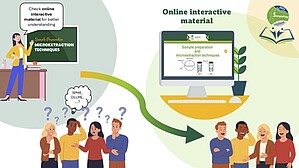
Title: Interactive teaching material on sample preparation and microextraction techniques
Members: Juan L. Benedé, Cristian Azorín, José Grau, Alberto Chisvert
Affiliation: Department of Analytical Chemistry, University of Valencia, Spain
Description: This interactive teaching resource introduces key concepts of sample preparation and modern microextraction techniques through structured theory, animations, and a wide range of question-based activities. Its intuitive, menu-driven design enables students to explore techniques independently while providing immediate feedback to reinforce conceptual understanding.
Link instructions: https://go.uv.es/vQGelc0 ; Link quizzes: https://go.uv.es/gicapc/sampleprepquiz
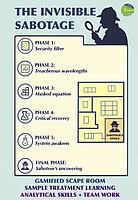
Title: Educational 'Escape Room' As A Learning Tool for Sample Treatment in Analytical Chemistry Subjects
Members: María Vergara-Barberán, Miriam Beneito-Cambra, María Jesús Lerma-García, Miguel Ángel Martínez-Briones, Raul Mínguez-Peláez, Gonzalo de Joz-Latorre, Paula Molina-Brotons
Affiliation: CLECEM group, Department of Analytical Chemistry, University of Valencia, Spain
Description: This educational escape room immerses students in a story-driven investigation where they solve analytical challenges linked to sampling, preservation, pretreatment, and interference removal. Through puzzles, literature searches, calculations, and hands-on decision making, it reinforces sample-treatment concepts while promoting teamwork, critical thinking, and active learning.
Link: https://go.uv.es/4WQ4DV1
Title: Examples of sample preparation methods applied to food matrices
Members: Adrián Fuente-Ballesteros, Ana Jano, Estela Prieto, Kemi F. Oriade, Silvia Valverde, Ana M. Ares, José Bernal
Affiliation: Analytical Chemistry Group (TESEA), I. U. CINQUIMA, Faculty of Sciences, University of Valladolid, Valladolid, Spain
Description: These educational videos is a collaborative task focused on analytical chemistry for sustainable sample preparation. It provides sample preparation and green analytical chemistry information, illustrated through practical examples drawn from research studies involving the analysis of different food matrices. Through innovative and inclusive content, these videos empowers learners to adopt environmentally responsible practices in analytical chemistry. This material has been prepared in collaboration with different sample preparation groups.
Collaborators: Natalia Manousi and Apostolia Tsiasioti (TU Wien, Austria; Aristotle University of Thessaloniki, Greece); Laura Carbonell-Rozas (Wageningen University, the Netherlands; University of Almeria, Spain); Barbora Strasserová (University of Chemistry and Technology Prague, Czech Republic); Rodolfo Simoes, Rosa Pérez Gregorio and, Jorge A. Custodio-Mendoza (Universidade de Vigo, Spain).
Link: https://go.uv.es/2VWELvN
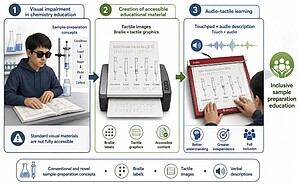
Title: Inclusion of students with visual impairments in the education in sample preparation
Members: Natalia Manousi1, Natasa Kalogiouri2, Victoria F. Samanidou2, Konstantinos Papadopoulos3
Affiliation: 1Institute of Chemical Technology and Analytics, Vienna University of Technology, Vienna, Austria; 2Laboratory of Analytical Chemistry, School of Chemistry, Aristotle University of Thessaloniki, Thessaloniki, Greece; 3Laboratory of Accessibility and Support of Individuals with Disabilities, Department of Educational and Social Policy, University of Macedonia, Thessaloniki, Greece
Description: This educational activity promotes the inclusion of students with severe visual impairment or blindness in sample-preparation education through the development of audio-tactile learning materials. By combining tactile images, Braille labels, raised graphics, and verbal descriptions delivered through a touch-sensitive pad, the approach enables students to explore conventional and green sample-preparation procedures in an accessible, multimodal way. The activity reinforces key analytical concepts while fostering autonomy, understanding, and inclusive participation in chemistry education.
Link: https://go.uv.es/kp3wWOF
Dispersive Extraction
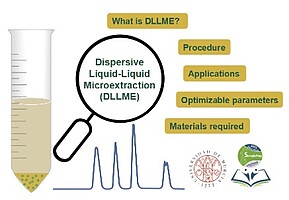
Title: Dispersive liquid-liquid microextraction
Members: Natalia Arroyo Manzanares, Marta Pastor Belda, Ana Castell Martínez, Claudia Giménez Campillo, María García Nicolás
Affiliation: University of Murcia, Spain
Description: This educational resource provides a clear, visual step-by-step introduction to Dispersive Liquid–Liquid Microextraction (DLLME), outlining its principles, required materials, optimizable parameters, and practical workflow. It serves as an accessible guide to help students understand and apply DLLME for trace analysis in environmental, food, biological, and pharmaceutical samples.
Link: https://go.uv.es/gCYv0IE
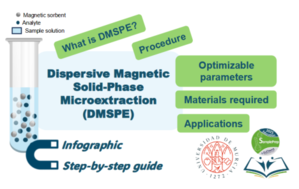
Title: Dispersive magnetic solid-phase extraction
Members: Yesica Vicente Martínez, Rosa María Peñalver Soler, Ana Castell Martínez, Claudia Giménez Campillo, María García Nicolás
Affiliation: University of Murcia, Spain
Description: This resource provides a clear, visual introduction to Dispersive Magnetic Solid-Phase Extraction (DMSPE), explaining its principles, required materials, optimizable parameters, and step-by-step workflow. It helps students understand how magnetic nanoparticles enable rapid adsorption–desorption cycles for trace analysis across environmental, food, biological, and pharmaceutical samples.
Link: https://go.uv.es/qqCe4Q3
Sample Preparation for Elemental Analysis
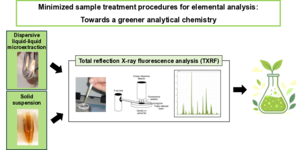
Title: Minimized sample treatment procedures for elemental analysis: Towards a greener analytical chemistry
Members: Eva Marguí, Laura Torrent, Josep Duran
Affiliation: Department of Chemistry, University of Girona, Spain
Description: This educational material introduces greener, simplified sample-treatment strategies for elemental analysis, focusing on liquid-phase microextraction for inorganic species and suspension preparation for direct solid analysis. Through comparison with conventional approaches and TXRF-based demonstrations, it highlights the benefits of minimized, sustainable workflows in modern analytical chemistry.
Link: https://go.uv.es/I0OnmjjNTAL ANALYSIS
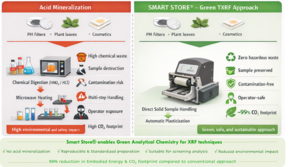
Title: Green approaches to sample preparation for elemental analysis
Members: Laura Borgese, Fabjola Bilo, Eva Marguí
Affiliation: Dipartimento di Ingegneria Meccanica e Industriale, University of Brescia, Brescia, Italy and Department of Chemistry, University of Girona, Girona, Spain
Description: This educational resource introduces sustainable sample-preparation strategies for elemental analysis, highlighting greener alternatives that minimize waste, reduce energy consumption, and improve operator safety. Through case studies and visual workflows, it demonstrates how adhesive-membrane sampling enables rapid, non-destructive, and environmentally friendly analysis of particulate matter, biomonitors, and consumer products.
Link: https://go.uv.es/YoJgM28